
Oklahoma County continues to see a high number of eviction filings, putting thousands of households at risk of losing their homes. New data from the first nine months of 2026 reveals how quickly an eviction can escalate, how little past-due rent may trigger an eviction filing, and how barriers to legal representation can make it harder for renters maintain stable housing.
The data also highlights why timely, accurate local eviction data matters. Understanding when and where evictions occur, and how quickly they progress, can help decision makers, service providers, and advocates identify gaps in the current system and work toward solutions that prevent housing loss.
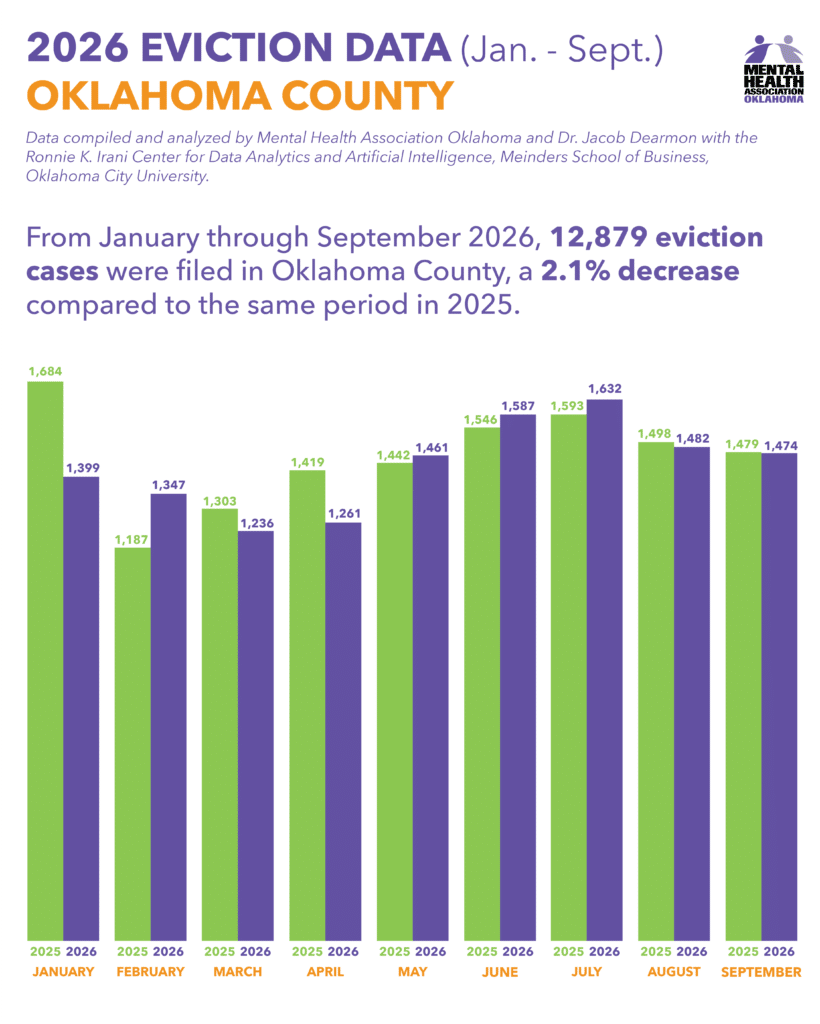
Oklahoma County recorded 4,587 eviction filings during the third quarter of 2026, from July through September. This represents a 6% increase over the second quarter (April-June), and a 13% increase over the first quarter.
These numbers reflect a growing number of eviction cases filed in Oklahoma County. While not every filing results in a household losing its home, a filing alone can disrupt school attendance, increase the risk of job loss, and worsen physical and mental health outcomes.
As eviction filings increased, the average amount of past-due rent at the time of the filing declined. By the third quarter, the average had fallen 10% from the first quarter.
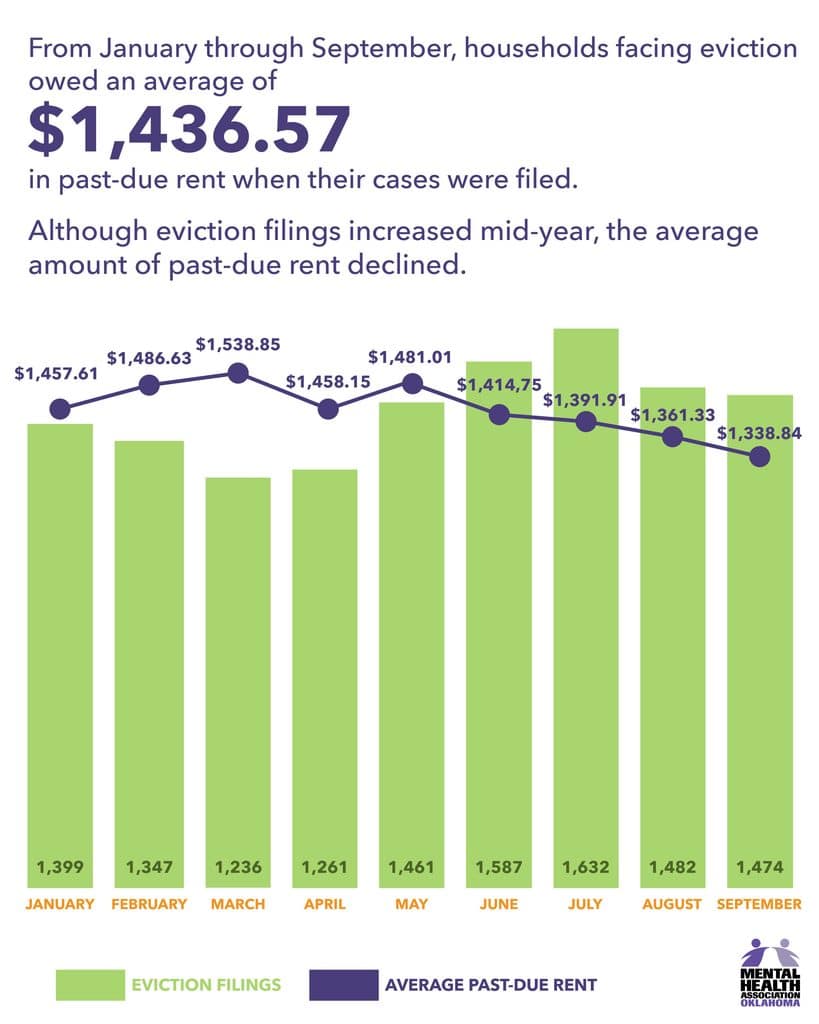
This challenges a common assumption that landlords typically wait until tenants have accumulated several months of unpaid rent before filing for eviction.
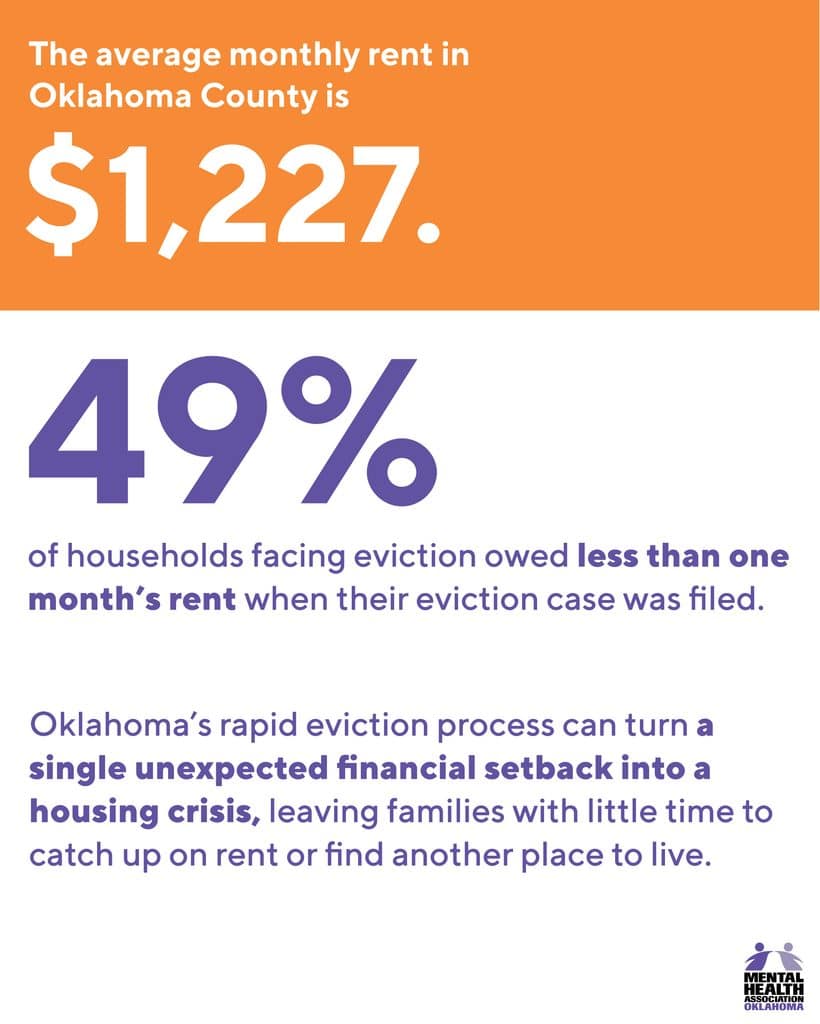
The average monthly rent in Oklahoma County is $1,227. Yet, 49% of eviction cases filed this year involved households that owed less than that amount in past-due rent when the case was filed.
For many families, an unexpected expense, reduced work hours, or a missed paycheck can make it difficult to pay rent on time. Even a temporary financial setback can put a family’s housing at risk. Oklahoma’s rapid eviction process heightens the risk of crisis, leaving families little time to seek rental assistance, work out a payment arrangement, or secure new housing.
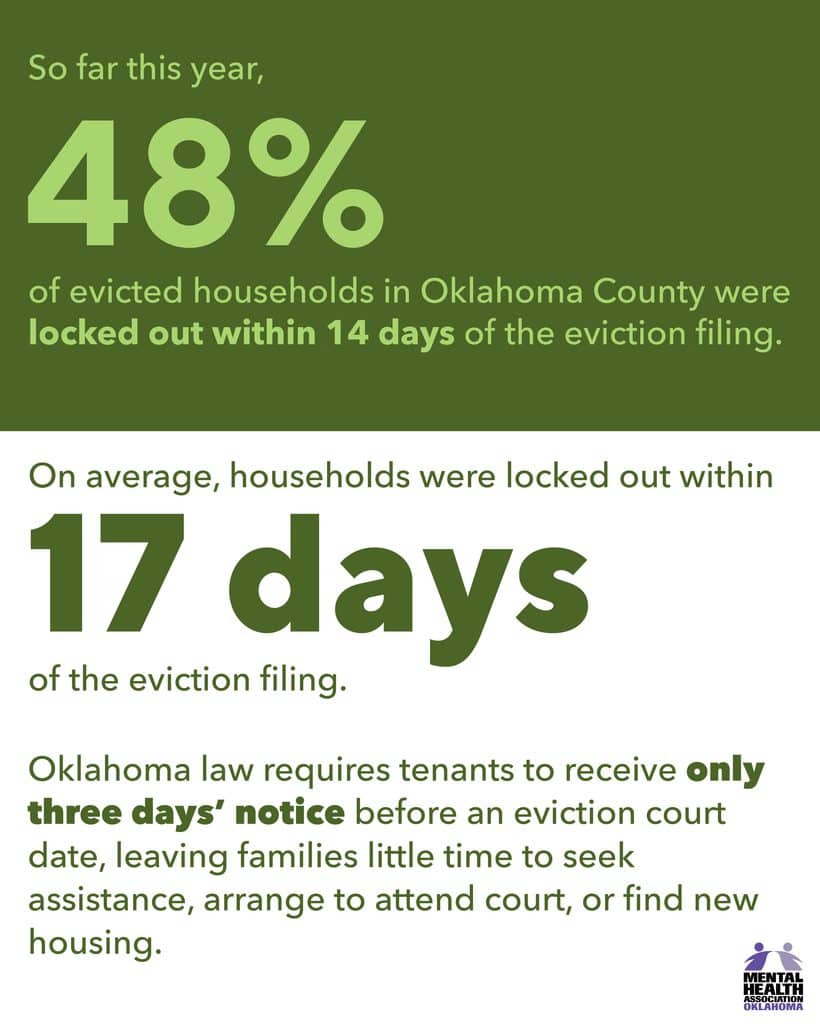
Oklahoma has one of the fastest eviction processes in the country. Courts schedule hearings within 5 to 10 days of an eviction filing, and tenants may receive as little as three days’ notice of their court date, including weekends.
Consider this: A renter returns home from work on a Friday and learns they have an eviction hearing the following Monday. This leaves little time to contact their landlord, seek legal representation, arrange transportation, and take time off work. If the court enters a judgment for the landlord, the process can quickly move toward a lockout. A sheriff may serve a notice to vacate as early as that afternoon, then return as soon as 48 hours later to lock them out.
The data shows just how little time some families have. So far in 2026, 48% of evicted households lost access to their homes within 14 days of filing an eviction. Across all evicted households, the average time between filing and lockout was just 17 days.
Oklahoma’s rapid eviction timeline leaves little room to access assistance or resolve a dispute. Expanding access to early mediation, legal support, and emergency rental assistance could help more families resolve housing issues before they lose their homes.
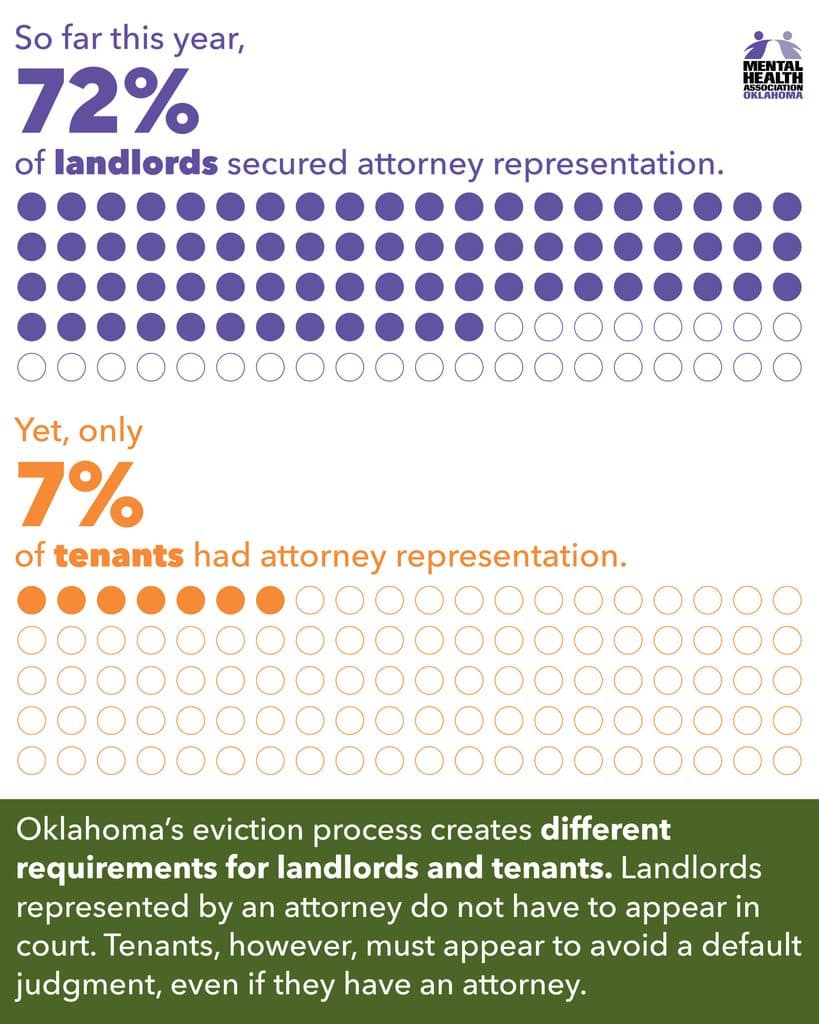
Legal representation is another significant disparity in Oklahoma County eviction cases. So far this year, 72% of landlords had attorney representation, compared with just 7% of tenants.
This gap matters because eviction proceedings can have serious consequences, and navigating the court process can be difficult without legal help. Tenants may need help understanding court requirements, responding to unpaid-rent claims, and addressing unmet repair needs.
Oklahoma’s court procedures also place different demands on landlords and tenants. A landlord represented by an attorney generally does not have to appear personally at an eviction hearing. Tenants, however, must appear to avoid a default judgment, even when they have an attorney. With so little time to arrange to attend court or secure legal representation, renters are more likely to lose their home and face the long-lasting impact of eviction.
Expanding access to legal representation and mediation would help tenants understand their options, address disputes, and participate more fully in the process. Lawmakers should consider extending eviction timelines and notice requirements to give parties more time to prepare.
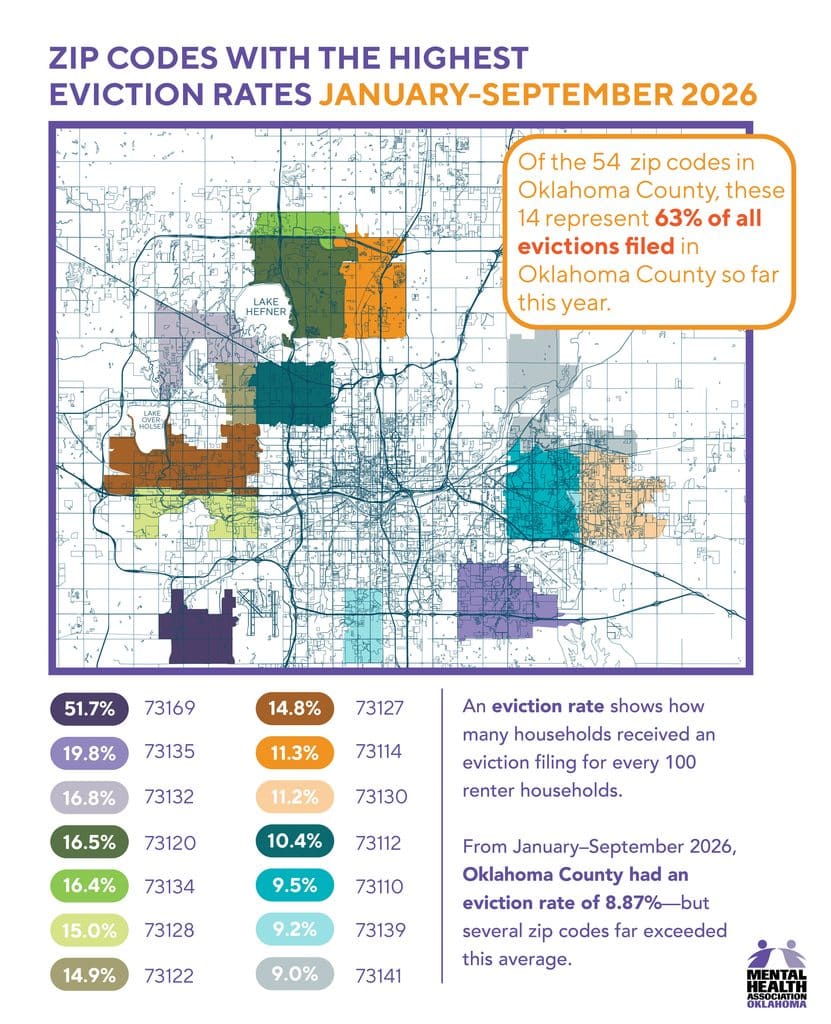
Northwest Oklahoma City and Midwest City continue to experience some of the county’s highest eviction rates. An eviction rate measures eviction filings per 100 renter households. During the first nine months of 2026, Oklahoma County’s eviction rate reached 8.87%, or nearly nine filings per 100 renter households.
Some zip codes experienced eviction rates far above the countywide figure. In zip code 73169, the eviction rate exceeded 50% during the first nine months of the year, with most filings coming from the Westmoor mobile home community, as reported here.
Exploring eviction data lets us understand more than just the total number of filings. It helps us understand how the eviction process affects Oklahoma families, where barriers exist, and where changes could make a meaningful difference.
The third-quarter data points to several opportunities for action, both in access to services and changes in policy: expanding access to early mediation and legal representation, improving access to emergency rental assistance, expanding eviction court timelines and notice requirements, and reforming the eviction process to protect a landlord’s ability to evict when necessary, while discouraging it from being part of a business practice.
Oklahoma County eviction data is collected by Mental Health Association Oklahoma and Dr. Jacob Dearmon with the Ronnie K. Irani Center for Data Analytics and Artificial Intelligence, Meinders School of Business at Oklahoma City University.
This reporting is made possible by the Oklahoma City Community Foundation’s Bridge OKC Fund.
You can sustain and expand eviction data reporting in Oklahoma with a gift at mhaok.org/donate.