

For Oklahomans who care about improving outcomes for our neighbors, especially those experiencing homelessness or mental illness, recent news has been difficult to hear.
Governor Stitt’s Operation SAFE continues to displace people experiencing unsheltered homelessness, raising concerns about whether people are being connected to the services and housing they need. Meanwhile, the Oklahoma Department of Mental Health and Substance Abuse Services (ODMHSAS) has had three commissioners in the past year and a half, creating uncertainty for mental health providers across the state.
When decisions like these affect our communities, it’s easy to feel powerless. But every Oklahoman can help shape what happens next: their voice.
Many decisions about mental health services, housing stability, and homelessness prevention are made right here in Oklahoma—not in Washington, D.C. Our state legislators help shape these policies, approve the state budget, and decide which bills become law.
And while the next legislative session doesn’t begin until February, now is the time to speak up. Lawmakers are already considering ideas and deciding which bills to introduce and support. Contacting them early gives you a chance to share your concerns and priorities before the session begins. Staying in touch throughout the process helps keep those issues on their radar.
That’s what Early & Often is all about.
Over the next few weeks, we’ll share how to make your voice heard at the state level. We’ll break down how Oklahoma’s state government works, how to find and contact your legislators, and how you can advocate for policies that strengthen mental health services, housing stability, and homelessness prevention. We’ll also share practical ways to make your voice heard—even if you’ve never contacted an elected official before.
You don’t need to be a policy expert to make a difference. You just need to know where to start.
Understanding Oklahoma’s State Government
Knowing who makes decisions—and how those decisions happen—can help you understand where your voice matters most.
Like the federal government, Oklahoma’s government has three branches:
- Executive branch: Led by the Governor, this branch carries out and enforces state laws.
- Legislative branch: The Oklahoma Legislature makes state laws and approves the state budget.
- Judicial branch: The courts interpret laws and resolve legal disputes.
Who Are Your State Legislators?
The Oklahoma State Legislature has two chambers:
- The House of Representatives: 101 members, called state representatives.
- The Senate: 48 members, called state senators.
Each legislator represents a specific district. Your state representative and state senator represent the people in their respective districts.
The Legislature’s regular session begins on the first Monday in February and generally runs through May. Representatives serve two-year terms, while senators serve four-year terms.
How Does a Bill Become Law?
A bill proposes a new law or a change to an existing law. Ideas for bills can come from community members, advocates, organizations, the Governor, or legislators. However, a legislator must formally introduce the bill.
Most bills never become law. During the last legislative session, lawmakers introduced 2,627 bills. Only 367 became law.
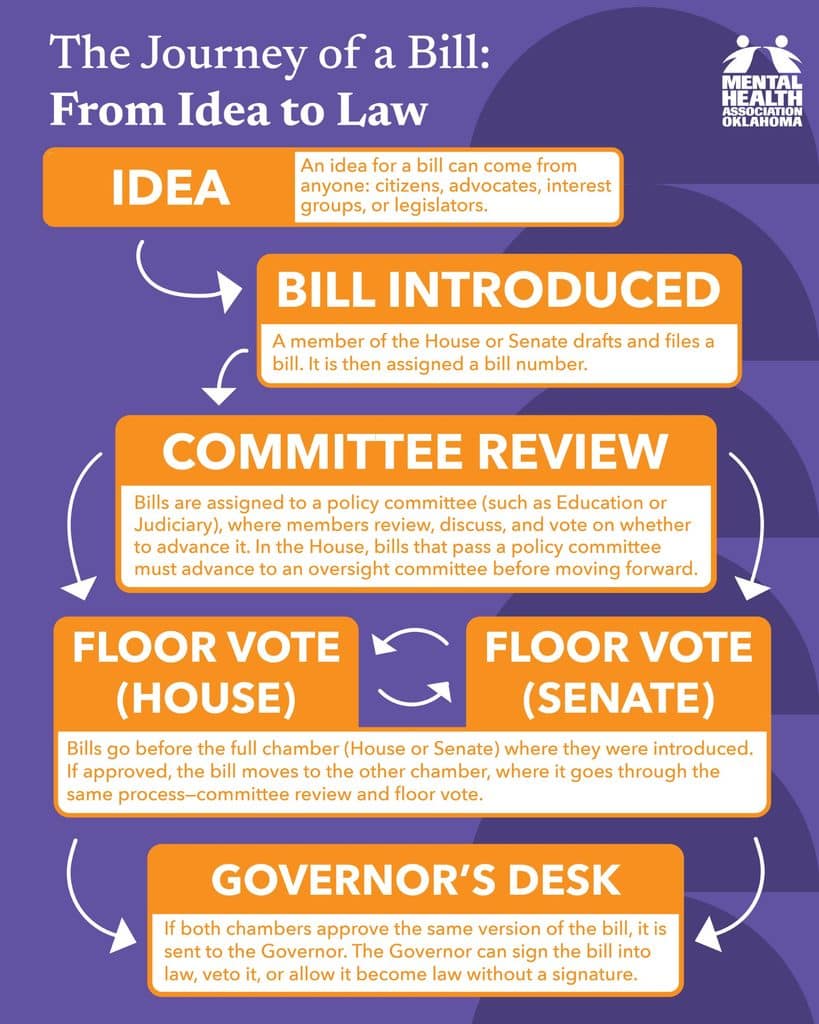
Once a bill is introduced, it goes to a policy committee (such as Education or Judiciary), where members review, discuss, and vote on whether to advance it. In the House, bills that pass a policy committee must advance to an oversight committee before moving forward.
If a bill advances through committee, it can go before the full House or Senate for a vote. If it passes, it moves to the other chamber, where it goes through a similar process.
The House and Senate must approve the same version of a bill before it can go to the Governor. The Governor can sign the bill into law or veto it. Under certain circumstances, a bill may become law without the Governor’s signature. The Legislature can override a veto if enough members vote to do so.
This process can take time; a bill can stall at several points along the way. That’s why it matters to contact your legislators early and keep reaching out as the session progresses.
How to Contact Your Legislators
You can easily find your state representatives by visiting the Oklahoma Policy Institute’s “Find Your Legislator” tool. Enter your home address and zip code to identify your elected officials.
Federal legislators may appear first, so look for your state representative and state senator. Use the contact information provided to email their offices or call to speak with a member of their staff.
You don’t have to wait until a bill is up for a vote to reach out. Contact your legislators now to introduce yourself, share what matters to you, and ask what issues they plan to prioritize.
What Should You Say?
You don’t need a long speech or a perfectly worded message. A short, personal note can be a meaningful first step.
Keep your message personal, polite, and brief.
- Introduce yourself. Let the legislator know you live in their district.
- Explain why you’re reaching out. Share a personal experience, professional insight, or concern about an issue affecting your community.
- Ask for a specific action. Tell them what you want them to support, oppose, or consider. When possible, focus on practical solutions.
- Thank them for their time. A respectful message helps build an ongoing conversation.
You can email, call, or request a meeting. If you don’t receive a response right away, don’t be discouraged. Legislative offices receive many messages, and staff may need time to respond.
Most importantly, you don’t have to be an expert to speak up. Your experiences, concerns, and hopes for your community are valuable.
Why Early & Often Matters
Your legislators are elected to represent you. But they can’t fully understand your community’s needs if they never hear from the people who live there.
Speaking up before the session begins helps lawmakers understand which issues matter to their constituents. Staying engaged during the session gives you opportunities to share your perspective as lawmakers consider bills and make decisions.
Whether you care about access to mental health care, stable housing, preventing homelessness, or another issue affecting Oklahomans, your voice belongs in these conversations.
Over the coming weeks, we’ll share more about Oklahoma’s legislative process, the policies that affect our communities, and practical ways to get involved.
Your voice matters. Speak up—Early & Often.
¿Cuándo deberías contactar con tus legisladores? Pronto y con frecuencia.
Para los habitantes de Oklahoma que se preocupan por mejorar los resultados para nuestros vecinos, especialmente para quienes están sin hogar o con enfermedades mentales, las noticias recientes han sido difíciles de escuchar.
La Operación SAFE del gobernador Stitt sigue desplazando a personas que experimentan personas sin hogar sin techo, generando preocupaciones sobre si las personas están siendo conectadas con los servicios y viviendas que necesitan. Mientras tanto, el Departamento de Salud Mental y Servicios de Abuso de Sustancias de Oklahoma (ODMHSAS) ha tenido tres comisionados en el último año y medio, lo que genera incertidumbre para los proveedores de salud mental en todo el estado.
Cuando decisiones como estas afectan a nuestras comunidades, es fácil sentirse impotente. Pero cada habitante de Oklahoma puede ayudar a moldear lo que ocurre después: su voz.
Muchas decisiones sobre servicios de salud mental, estabilidad de vivienda y prevención de la falta de vivienda se toman aquí mismo, en Oklahoma, no en Washington, D.C. Nuestros legisladores estatales ayudan a definir estas políticas, aprueban el presupuesto estatal y deciden qué proyectos de ley se convierten en ley.
Y aunque la próxima sesión legislativa no comienza hasta febrero, ahora es el momento de alzar la voz. Los legisladores ya están considerando ideas y decidiendo qué proyectos presentar y apoyar. Contactar con ellos temprano te da la oportunidad de compartir tus preocupaciones y prioridades antes de que comience la sesión. Mantenerse en contacto durante todo el proceso ayuda a mantener esos temas en su radar.
De eso trata Early & Often.
Durante las próximas semanas, compartiremos cómo hacer oír tu voz a nivel estatal. Desglosaremos cómo funciona el gobierno estatal de Oklahoma, cómo encontrar y contactar con tus legisladores, y cómo puedes abogar por políticas que refuercen los servicios de salud mental, la estabilidad de la vivienda y la prevención de la falta de vivienda. También compartiremos formas prácticas de hacer oír tu voz, incluso si nunca has contactado con un cargo electo.
No necesitas ser un experto en políticas para marcar la diferencia. Solo necesitas saber por dónde empezar.
Entendiendo el Gobierno del Estado de Oklahoma
Saber quién toma las decisiones —y cómo ocurren— puede ayudarte a entender dónde importa más tu voz.
Al igual que el gobierno federal, el gobierno de Oklahoma tiene tres poderes:
- Poder ejecutivo: Dirigido por el gobernador, este poder aplica y hace cumplir las leyes estatales.
- Poder legislativo: La Legislatura de Oklahoma elabora leyes estatales y aprueba el presupuesto estatal.
- Poder judicial: Los tribunales interpretan las leyes y resuelven disputas legales.
¿Quiénes son vuestros legisladores estatales?
La Legislatura del Estado de Oklahoma tiene dos cámaras:
- La Cámara de Representantes: 101 miembros, llamados representantes estatales.
- El Senado: 48 miembros, llamados senadores estatales.
Cada legislador representa un distrito específico. Tu representante estatal y tu senador estatal representan a la gente en sus respectivos distritos.
La sesión ordinaria de la Legislatura comienza el primer lunes de febrero y generalmente se extiende hasta mayo. Los representantes ejercen mandatos de dos años, mientras que los senadores cumplen mandatos de cuatro años.
¿Cómo se convierte un proyecto de ley en ley?
Un proyecto de ley propone una nueva ley o un cambio a una ley existente. Las ideas para proyectos de ley pueden provenir de miembros de la comunidad, defensores, organizaciones, el gobernador o legisladores. Sin embargo, un legislador debe presentar formalmente el proyecto de ley.
La mayoría de los proyectos nunca llegan a ser ley. Durante la última sesión legislativa, los legisladores presentaron 2.627 proyectos de ley. Solo 367 se convirtieron en ley.
Una vez presentado un proyecto de ley, va a un comité de política (como Educación o Justicia), donde los miembros revisan, discuten y votan sobre si lo impulsan. En la Cámara, los proyectos de ley que pasan por un comité de política deben pasar a un comité de supervisión antes de avanzar.
Si un proyecto de ley avanza en comité, puede pasar por la votación en pleno de la Cámara o el Senado. Si se aprueba, pasa a la otra cámara, donde pasa por un proceso similar.
La Cámara y el Senado deben aprobar la misma versión de un proyecto de ley antes de que pueda llegar al Gobernador. El Gobernador puede firmar el proyecto de ley o vetarlo. Bajo ciertas circunstancias, un proyecto puede convertirse en ley sin la firma del Gobernador. La Legislatura puede anular un veto si suficientes miembros votan a favor.
Este proceso puede llevar tiempo; un proyecto de ley puede estancarse en varios puntos del camino. Por eso es importante contactar con tus legisladores con antelación y seguir contactando a medida que avanza la sesión.
Cómo contactar con tus legisladores
Puedes encontrar fácilmente a tus representantes estatales visitando la herramienta “Find Your Legislator” del Oklahoma Policy Institute. Introduce tu dirección de domicilio y código postal para identificar a tus representantes electos.
Los legisladores federales pueden aparecer primero, así que busca a tu representante estatal y senador estatal. Utiliza la información de contacto proporcionada para enviar un correo electrónico a sus oficinas o llamar para hablar con algún miembro de su equipo.
No tienes que esperar a que un proyecto de ley esté a votación para contactar con él. Contacta ahora con tus legisladores para presentarte, compartir qué te importa y preguntar qué temas planean priorizar.
¿Qué deberías decir?
No necesitas un discurso largo ni un mensaje perfectamente redactado. Una nota corta y personal puede ser un primer paso significativo.
Mantén tu mensaje personal, educado y breve.
- Preséntate. Hazle saber al legislador que vives en su distrito.
- Explica por qué te estás poniendo en contacto. Comparte una experiencia personal, una visión profesional o una preocupación sobre un problema que afecta a tu comunidad.
- Pide una acción concreta. Diles qué quieres que apoyen, se opongan o consideren. Cuando sea posible, céntrate en soluciones prácticas.
- Agradéceles su tiempo. Un mensaje respetuoso ayuda a construir una conversación continua.
Puedes enviar un correo electrónico, llamar o solicitar una reunión. Si no recibes respuesta de inmediato, no te desanimes. Las oficinas legislativas reciben muchos mensajes y el personal puede necesitar tiempo para responder.
Lo más importante es que no tienes que ser un experto para alzar la voz. Tus experiencias, preocupaciones y esperanzas para tu comunidad son valiosas.
Por qué temprano y con frecuencia importa
Tus legisladores son elegidos para representarte. Pero no pueden comprender completamente las necesidades de tu comunidad si nunca escuchan a quienes viven allí.
Hablar antes de que comience la sesión ayuda a los legisladores a entender qué temas importan a sus electores. Mantenerse comprometido durante la sesión te da la oportunidad de compartir tu perspectiva mientras los legisladores consideran proyectos de ley y toman decisiones.
Ya sea que te importe el acceso a la atención de salud mental, una vivienda estable, prevenir la falta de vivienda u otro problema que afecte a los habitantes de Oklahoma, tu voz debe estar en estas conversaciones.
En las próximas semanas, compartiremos más sobre el proceso legislativo de Oklahoma, las políticas que afectan a nuestras comunidades y formas prácticas de implicarse.
Tu voz importa. Habla más alto—pronto y con frecuencia.